Some of the links in this article are "affiliate links", a link with a special tracking code. This means if you click on an affiliate link and purchase the item, we will receive an affiliate commission.
The price of the item is the same whether it is an affiliate link or not. Regardless, we only recommend products or services we believe will add value to our readers.
By using the affiliate links, you are helping support our Website, and we genuinely appreciate your support.
The Moment Your Knife Becomes an Extension of Your Hand
I still remember the first time I successfully julien’d a carrot without slicing my index finger. It was a rainy Tuesday evening, I was wearing mismatched socks, and the carrot was rolling around on my cutting board like a slippery eel. I had been staring at a dull, $8 knife from a department store discount rack for weeks, hacking at vegetables with the enthusiasm of a woodcutter but the precision of a blindfolded toddler. That night, after finally getting a clean, thin slice, I felt a strange sense of calm wash over the kitchen. The chopping stopped sounding like a chaotic drum solo and started sounding like a rhythmic, steady beat.
That was the moment I realized that knife skills aren’t just about looking cool in a cooking show; they are the difference between cooking that feels like work and cooking that feels like play. When you’re efficient, dinner on the table comes together in 30 minutes instead of an hour. When your cuts are even, your food cooks uniformly, meaning no more burnt edges and raw centers. It’s practical, it’s safe, and honestly, it’s just more fun.
Choosing the Right Tool for the Job
You don’t need a full set of twenty knives to cook well. In fact, most of us only use three or four on a regular basis. If you’re still relying on that cheap block set where every blade is roughly the same size and shape, it’s time to upgrade. According to Chef Marcus Samuelsson, a good chef’s knife is the backbone of any kitchen, and I couldn’t agree more.
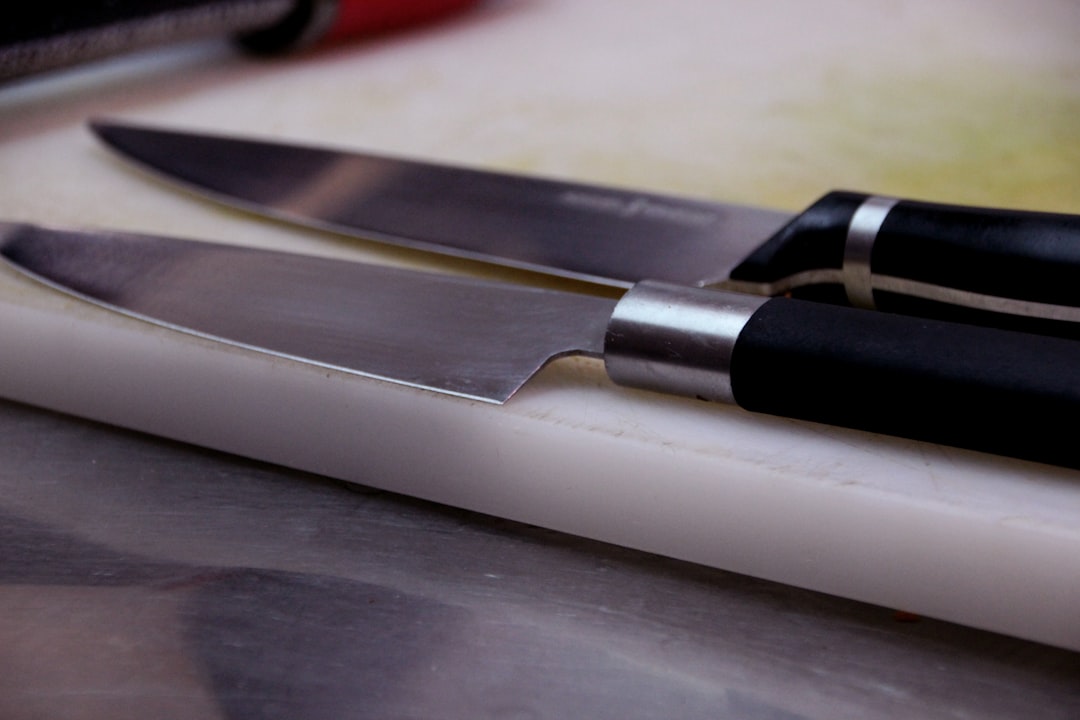
My go-to is an 8-inch chef’s knife. It’s long enough to chop a bunch of parsley in one smooth motion but light enough to maneuver around a whole chicken without fatigue. You don’t need to spend a fortune. A solid German-style steel knife runs about $120–$150, but a fantastic high-carbon stainless steel option can be found for under $50. Just avoid the pre-fabricated sets. Instead, pick up a single, high-quality chef’s knife and a small paring knife. The paring knife is your best friend for peeling apples, hulling strawberries, or trimming green beans. I’ve found that having a dedicated small knife prevents me from using the chef’s knife for delicate tasks, which keeps the big blade’s edge intact for longer.
If you’re wondering what else belongs on your counter, check out my guide on the 10 Essential Kitchen Tools Every Beginner Needs. You’ll see that while gadgets are fun, knives are where the real magic happens.
The Grip That Changes Everything
Most beginners hold their knife like a dagger, gripping the handle tightly with their whole hand. This is comfortable, sure, but it offers zero control. The blade wobbles, and you end up with uneven slices. The technique I swear by is called the “pinch grip.” Here’s how to do it: instead of holding just the handle, use your thumb and your index finger to pinch the blade itself, right where the metal meets the handle (the bolster). Your other three fingers wrap around the handle.
At first, it feels weird. My hand cramped for a week. But once it clicks, you’ll never go back. This grip turns your hand into a pivot point. You control the angle and the depth of the cut with your fingertips, not just your wrist strength. It’s like holding a paintbrush.
While you’re getting comfortable, make sure your cutting board isn’t sliding around. I keep a damp paper towel underneath mine. It costs pennies and stops the board from marching across the counter while I’m trying to dice an onion. Simple trick, huge difference.
Basic Cuts: Dicing, Slicing, and the Rock Chop
Let’s talk technique. There are two main ways we cut food: the “rock chop” and the “claw.”
The rock chop is my favorite for herbs, garlic, and soft vegetables. You keep the tip of the knife on the board and lift the handle, letting the blade rock back and forth over the food. It’s efficient and keeps your fingers safe because they’re tucked under your guiding hand in a “claw” shape. Your fingertips point down, and your knuckles guide the side of the blade. This ensures consistent thickness.
For slicing meat or larger vegetables like cucumbers, you use a forward-and-back motion. You aren’t pressing down; you’re drawing the blade toward you. Think of it like slicing a loaf of bread. If you press down too hard, you crush the cells, releasing water and making your salad soggy.
I learned this the hard way when I made a coleslaw that turned into a watery mess within an hour. I was hacking at the cabbage instead of slicing it. Since then, I’ve focused on using the sharpness of the blade to do the work, not my arm muscles. This attention to texture actually ties into how we eat for health. Just like how eating the rainbow provides diverse nutrients, how you prepare those veggies affects how your body absorbs them. Proper cutting preserves the integrity of the plant cells.
Keeping Your Edge: Honing vs. Sharpening
Here is a secret that confuses a lot of home cooks: a dull knife is more dangerous than a sharp one. When a knife is dull, you have to apply more pressure to cut through food. If the blade slips, it travels further and faster, increasing the chance of injury. A sharp knife glides.
You need to distinguish between honing and sharpening. Honing realigns the edge; sharpening removes metal to create a new edge. I use a honing steel every time I cook. It takes about 30 seconds. You hold the steel vertically and run the blade down at a 15-20 degree angle, alternating sides. This isn’t sharpening; it’s straightening the microscopic teeth of the blade.
For actual sharpening, I send my knives out to a professional every six months, or I use a whetstone if I’m feeling adventurous. A whetstone costs around $25 and lasts a lifetime. But for most people, a pull-through sharpener is a good middle ground. Just don’t overdo it. You only need to sharpen when the honing steel stops doing the trick.
This maintenance pays off in the kitchen. When your ingredients are prepped quickly and easily, you’re less likely to get frustrated and order takeout. Plus, fresh, quickly prepped veggies retain more nutrients. It’s a small step toward those healthy lifestyle changes for better energy that keep us feeling good all day long.
Safety and Focus in the Kitchen
I’ve had a few scares over the years. There was the time I was talking on the phone while slicing limes and nearly took off a piece of my thumb. The lesson? Never multitask with your knife. And never look away.
Also, keep your workspace tidy. I call this “mise en place,” a French term that just means “everything in its place.” If you have empty bowls, trash, and ingredients cluttering your board, you’ll bump into things. Clear a space. Throw away peels as you go. It keeps the flow going.
Saying you need to detox your body often brings to mind expensive juices, but it starts with clean, simple ingredients. And clean ingredients require clean prep. When you’re chopping fresh kale or dicing organic tomatoes, you’re mindful of what you’re eating. It slows you down in a good way.
Practice Makes Perfect (and Fun)
So, how do you get good? You practice. But you don’t need to spend hours. I dedicate about 10 minutes a week just to cutting. I buy a bag of onions and practice making perfect brunoise (tiny, uniform cubes). I buy a bunch of cilantro and practice chopping it without bruising the leaves.
It doesn’t have to be boring. Try slicing strawberries for a summer dessert, or chopping nuts for a salad. Foods that strengthen your immune system like ginger, garlic, and citrus become your practice buddies. You’re improving your skill and boosting your health at the same time.
My first attempt at a classic French chiffonade of basil was a disaster—it looked like confetti. But after a month of doing it, I got it. Now, I can do it with my eyes closed while the coffee brews. That confidence spills over into other parts of cooking. You start trusting your tools. You start enjoying the process.
Enjoy the Process
Knife skills aren’t about perfection; they’re about efficiency and enjoyment. You don’t need to be a professional chef. You just need a sharp knife, a stable board, and a willingness to learn. Once you master the pinch grip and the rock chop, you’ll find yourself looking forward to dinner prep. The chopping becomes meditative. The smell of garlic hitting hot oil becomes a welcome signal that dinner is almost ready.
Don’t be afraid to experiment. Try cutting a mango differently. Try julienning carrots for stir-fry. Your kitchen is your playground. And with a good knife in hand, you’re ready to create something delicious.
Frequently Asked Questions
How often should I sharpen my knife?
It depends on usage. If you cook daily, you might need a professional sharpening every 6-12 months. If you cook a few times a week, once a year is plenty. Honing should happen before every use.
Can I use my chef’s knife for everything?
Mostly, yes! You can chop, slice, and crush garlic with it. Just don’t use it to cut through bones or frozen foods, as it can chip the edge. Save those tasks for a cleaver or a heavy-duty knife.
What’s the best way to store my knives?
Avoid throwing them in a drawer where they bang against other utensils. A magnetic strip or a knife block is ideal. If you must use a drawer, invest in a knife guard or a felt-lined tray to protect the blades.