
Filipino Pancit Bihon

This popular noodle dish has vegetables, protein, and carbs all in one.
Serves6
Prep40 minutes
Cook30 minutes
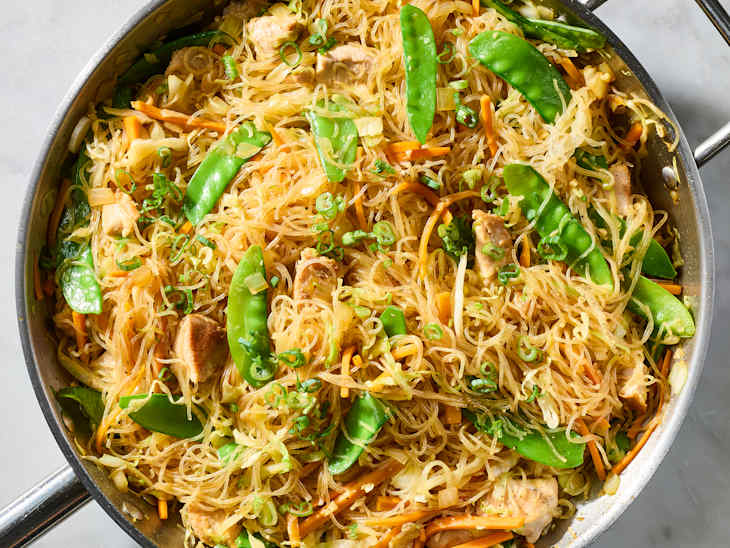
Pancit is a Filipino noodle dish (the word “pancit,” sometimes spelled pansit, translates to noodles). It’s derived from the Hokkien term, “pian e sit,” which means “something cooked fast” and arrived in the Philippines during our extensive trading with China, which began as early as 9th century AD. (Fun fact: The oldest Chinatown in the world is also found in Manila, Philippines, and was established in the 1500s.)
The most common Filipino noodle dish people often refer to is pancit bihon, a stir-fried noodle dish packed with a medley of vegetables, like cabbage, carrots, and snow peas, and often made with either pork or chicken. In most Filipino households like mine, pancit symbolized longevity and good fortune, so we often eat it during birthdays and Christmas parties. When I was growing up I always associated pancit with celebrations, but as I’ve gotten older I’ve started making it a part of my meal rotation. It’s simple and hearty while not being heavy, which makes it a perfect dish for any season.
Why You’ll Love It
- Budget-friendly. It doesn’t require any hard-to-find ingredients and uses affordable vegetables like cabbage and carrots. It’s also only seasoned with salt, pepper, and soy sauce, which you probably already have at home.
- It’s a complete package. It has your vegetables, protein, and carbs all in one.
- Serves a crowd. Looking for your next crowd-pleaser? This recipe makes for a perfect dish to bring to potlucks and dinner parties.
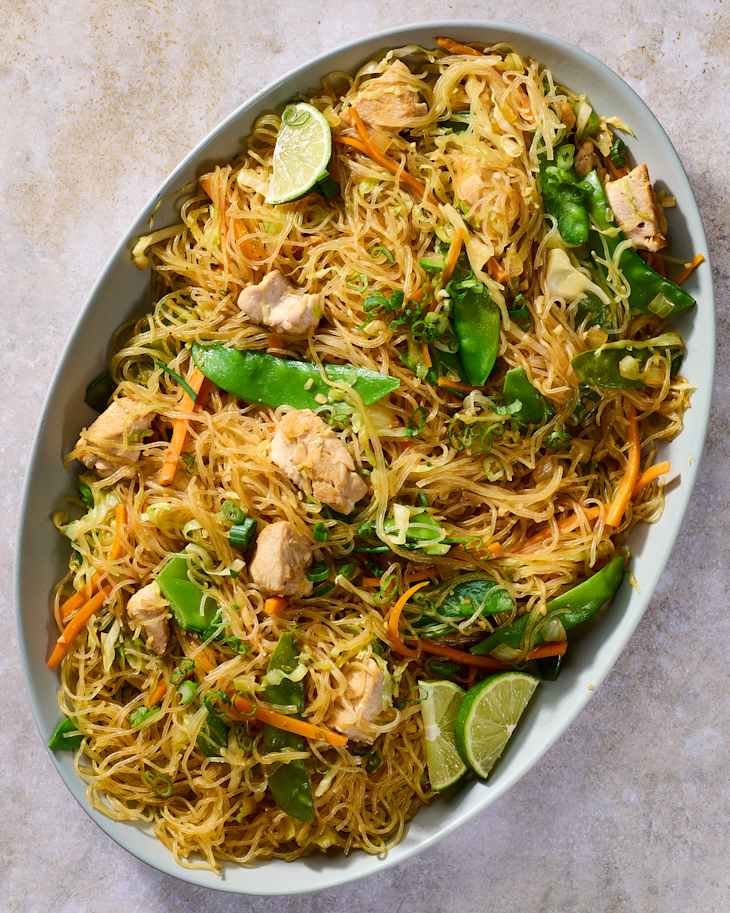
Key Ingredients in Filipino Pancit Bihon
- Cornstarch noodles: The Super Q brand works well.
- Soy sauce: Adds umami and deepens the color of the noodles. I like to use Silver Swan, but any brand works.
- Toasted sesame oil: While not traditional, this version uses toasted sesame oil to add nuttiness and a layer of complexity, without being overpowering.
How to Make Filipino Pancit Bihon
- Cook the noodles. Soak the noodles in boiling water until softened, then drain and set aside.
- Cook the chicken. Brown the bottom of the chicken and season with salt, then set aside.
- Sauté the vegetables. Stir-fry the onions, garlic, carrots, cabbage, and snow peas together until crisp-tender.
- Add the noodles and chicken. Season with soy sauce and more grinds of black pepper to taste. Stir-fry until combined.
- Add half of the sliced scallions. Stir-fry for another minute, then serve with lime wedges on the side.
Helpful Swaps
- Swap the cornstarch noodles with thin mung bean vermicelli noodles or thin glass noodles.
- Use tamari instead of soy sauce to make it gluten-free.
- Swap the chicken for thin strips of pork belly (and skip the oil entirely).
- Use thinly sliced green beans instead of snow peas.
- Use a neutral oil like avocado, canola, or vegetable oil if you don’t have toasted sesame oil. You might miss the extra flavor it provides, but you can still make this dish.
- Make it vegan by frying extra-firm tofu instead of chicken. (You can also try an entirely plant-based version in my cookbook, Make It Plant-Based! Filipino.)
Storage and Make-Ahead Tips
You can chop all of your vegetables a day ahead. Refrigerate any leftovers in an airtight container for up to 3 days.
What to Serve with Pancit Bihon
Tips from Our Recipe Tester
I loved it! There are so many versions of pancit, but this version (pancit bihon) is the one everyone should know how to make. I really loved all the veggies here — so much texture and color. It was very satisfying to eat. My mom also used snow peas in her pancit bihon, so this really tasted like home! —Jan, September 2025
Filipino Pancit Bihon Recipe
This popular noodle dish has vegetables, protein, and carbs all in one.
Prep time 40 minutes
Cook time 30 minutes
Serves 6
Nutritional Info
Ingredients
- 8 ounces
dried Golden Bihon Cornstarch Noodles
- 2 tablespoons
toasted sesame oil, plus more as needed
- 1 pound
boneless, skinless chicken breasts, cut into 1/2-inch chunks
- 1 1/2 teaspoons
kosher salt, divided, plus more as needed
- 1
large yellow onion, diced (about 2 cups)
- 5 cloves
garlic, minced
- 8 ounces
carrots (2 medium or 1 large), peeled and cut into matchsticks (about 1 1/2 cups)
- 1/4
medium head green cabbage (about 8 ounces), cored and cut into thin shreds (2 to 2 1/2 cups)
- 6 ounces
snow peas, stem ends trimmed
Freshly ground black pepper
- 1/2 cup
soy sauce
- 2
medium scallions, thinly sliced (about 1/4 cup)
- 1
medium lime, cut into wedges
Instructions
Bring a large saucepan of water to a boil over medium-high heat. Turn off the heat. Add 8 ounces dried cornstarch noodles and make sure they are submerged. Let sit until softened, about 5 minutes. Drain.
Heat 1 tablespoon of the toasted sesame oil in a large wok or 12-inch frying pan on medium-high heat until shimmering. Add 1 pound boneless, skinless chicken breast chunks and spread into an even layer. Season with 1/2 teaspoon of the kosher salt. Cook undisturbed until browned on the bottom, 3 to 4 minutes. Stir-fry until lightly browned and cooked through, 3 to 5 minutes more. Transfer to a plate.
Add the remaining 1 tablespoon toasted sesame oil to the pan. Add 1 diced large yellow onion and 5 minced garlic cloves. Stir-fry until softened, about 2 minutes. Add 8 ounces peeled and matchstick cut carrots, season with the remaining 1 teaspoon kosher salt, and stir-fry until crisp-tender, about 2 minutes.
Add 1/4 medium head shredded green cabbage and stir-fry until slightly wilted, about 2 minutes. Add 6 ounces snow peas and a few grinds of black pepper, and stir-fry until crisp-tender, about 2 minutes.
Add the noodles and chicken and any accumulated juices on the plate. Drizzle with 1/2 cup soy sauce and season with a few more grinds of black pepper. Stir-fry until combined, 1 to 2 minutes.
Add half of the sliced scallions (about 2 tablespoons) and stir-fry for 1 minute more. Taste and season with more kosher salt and black pepper as needed. Garnish with the remaining scallions and serve with lime wedges.
Recipe Notes
Substitutions: Use dried thin mung bean vermicelli noodles or thin glass noodles if you can’t find cornstarch noodles.
Storage: Refrigerate leftovers in an airtight container for up to 3 days.