
How (and Where) to Check a Turkey’s Temperature for Doneness
When is the turkey done? What temperature should it be? These are important questions, especially when you’re roasting a turkey that’s the centerpiece of Thanksgiving dinner. We have the answers you need so you can cook a safe and delicious turkey in the oven. First thing’s first: When the turkey’s internal temperature registers a steady 165°F in the thigh, the meat is done.
It’s an important number to remember because, when it comes to Thanksgiving food, there’s definitely pressure to get the turkey right — and that includes getting the bird to a safe temperature before serving. Knowing when a turkey has reached the proper internal temperature (and how to check the temperature) will not only ensure that the turkey is safe to eat, but will also help you prevent your turkey from overcooking.
What Temperature is Turkey Done?
Check a turkey’s internal temperature by inserting an instant-read thermometer into the thickest part of the thigh, making sure you are not touching bone. The turkey is done when the temperature taken from this point has reached at least 165°F.
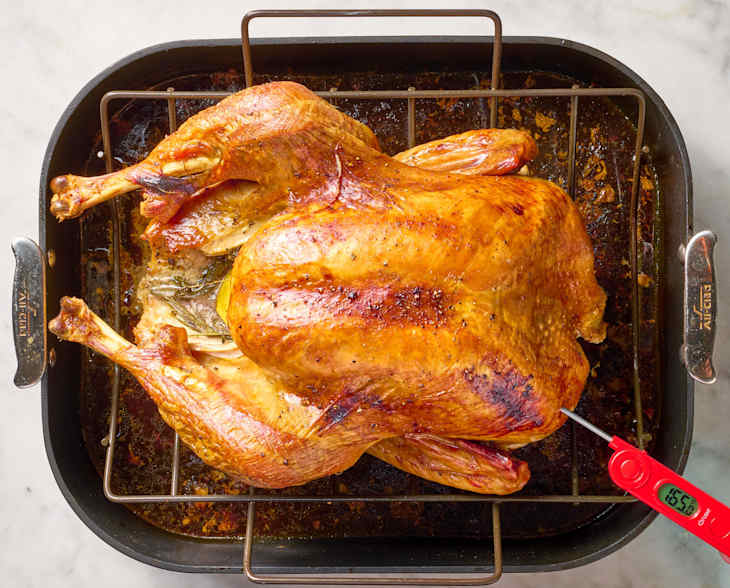
Why You Should Check the Internal Temperature
You may have noticed that many recipes call for checking the internal temperature of the turkey. That’s because checking the internal temperature — as opposed to jiggling a leg or checking that the juices run clear — is the most accurate way to judge that a turkey (and other poultry and meats, for that matter) is properly cooked.
Why 165ºF Is the Magic Number
The guideline of an internal temperature of at least 165ºF comes from the USDA. Turkey cooked to this temperature ensures that harmful bacteria is destroyed and helps to prevent foodborne illness, all good things when you’re serving this to a table full of Thanksgiving guests. Don’t be tempted to cook the turkey much past 165ºF just to be safe. This will result in overcooked, dry turkey which will need the help of a lot of turkey gravy to salvage.
Keep in mind that foods continue to cook a little more even after they come out of the oven, known as carryover cooking. A large turkey is no exception: If it’s registering 160ºF, you can take it out of the oven if you’d like. The temperature will climb up by a few more degrees as it rests. As long as the temperature hits 165ºF eventually, the turkey is safe to eat.
Where to Check a Turkey’s Temperature
The best way to check the temperature of a turkey is to stick an instant-read thermometer in the meatiest part of the thigh. This is one of the thickest parts of the turkey, and it takes the longest to cook; the white or breast meat tends to cook faster. That means if the thigh is at the right temperature (at least 165°F), you can be sure the rest of the turkey has also finished cooking.
If you’re not familiar with turkey anatomy, here are a few tips:
- Look at the turkey from above with the smaller neck cavity on top and the larger opening at the bottom.
- The little wings will be at the top, close to the neck opening.
- The big, meaty legs — the thighs and drumsticks — will be at the bottom.
- The drumsticks stick out from the body and attach to the thighs at a joint; the thighs attach to the body of the turkey.
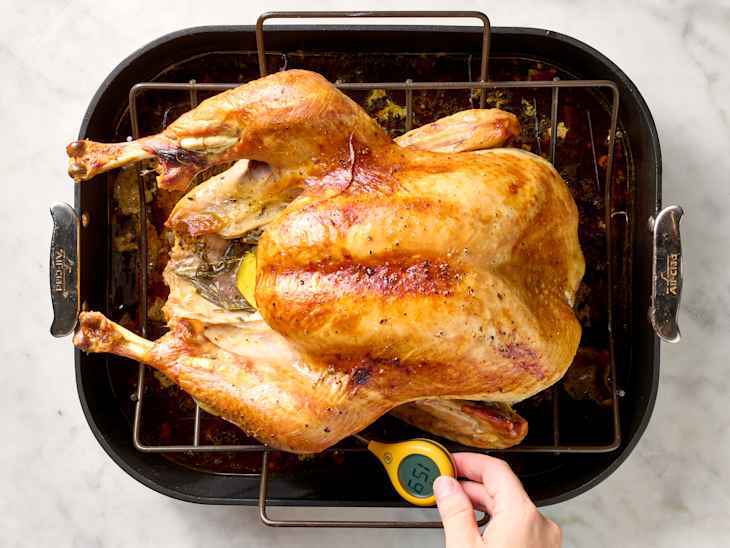
Where Is a Turkey’s Thigh?
A turkey’s thighs are a little under the drumsticks, which stick out from the turkey. In the above photo, the neck opening is to the right and the bottom of the turkey is to the left. The turkey is breast-side up, so the thighs are below the drumsticks. To take the temperature, you might need to carefully turn the turkey on its side.
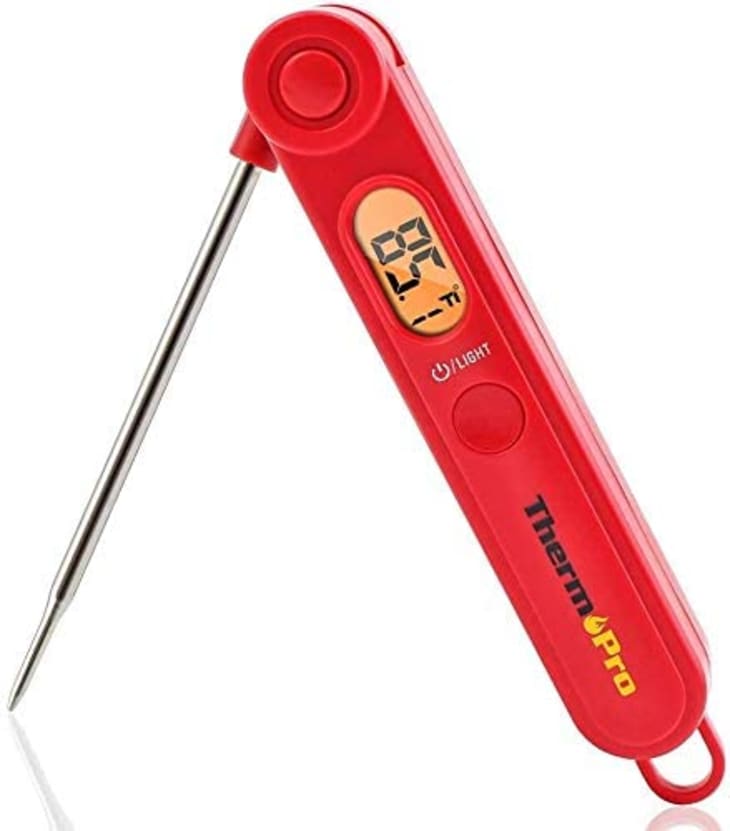
How to Check a Turkey’s Temperature
If you’ve never used a meat thermometer before, here are some key tips to checking a turkey’s temperature:
- Insert your instant-read thermometer into the thigh meat so that the thermometer is parallel to the body of the turkey. You should feel some resistance as it goes into the meat. If it suddenly slides very easy, that means you’ve poked through into the turkey cavity. If you hit something solid, that means you’ve come to a bone. In either case, pull back a little so the thermometer is in the meat of the thigh so you can get a proper reading.
- Make sure you know where the temperature sensor is on your thermometer. Some have it at the tip and others have it about half an inch above the tip. Check your thermometer’s manual and position your thermometer in the thigh meat accordingly.
- Hold the thermometer still: Keep the thermometer there until the numbers stop moving. It’s best to actually take the turkey completely out of the oven and close the oven door so you don’t lose too much heat from the oven. Ovens take a surprisingly long time to come back up to temperature, and leaving it open while you check the temperature will result in a longer cooking time for the turkey and anything else in the oven.
If the the turkey’s internal temperature has reached that steady 165°F, that indicates it’s properly cooked. Keep it out of the oven, tent it loosely in foil, and let it rest for at least 15 minutes so the juices have a chance to redistribute.
On the other hand, if the internal temperature has not reached 165°F, put the turkey back in the oven and continue to cook it, checking every 20 minutes or so for doneness.
How to Know Turkey is Cooked Without a Thermometer
While it’s not as reliable as using an instant-read thermometer, another way to judge the doneness of a turkey is to see if the juices run clear.
- Cut a small slit in the meat at various places around the turkey.
- Press just above the cut with the flat of your knife.
- If the juices that run out are clear, the turkey is done. If you see any red tinge of blood, keep cooking for a little longer.
Common Mistakes When Checking The Temperature of Turkey
- Only checking the temperature in one spot. Ovens may have hot spots and a turkey might not roast evenly. Take the temperature of both thighs, and move the thermometer around as needed to make sure the temperature is 165ºF everywhere in the thigh.
- Using a thermometer that isn’t reading properly. A thermometer’s accuracy can drift over time, so make sure it’s taking exact readings. Test and calibrate your thermometer a few days before Thanksgiving to give yourself time to buy a new one if needed.
- The thermometer’s set to Celsius. Yes, this happens to the best of us! Make sure your thermometer is set to Fahrenheit, not Celsius. Otherwise, your turkey will be way overcooked and inedible if you cook it to 165ºC (329ºF).