
Southern Caramel Cake

The caramel frosting is life changing.
Serves10 to 12
Makes1 layer cake
Prep40 minutes
Cook25 minutes to 30 minutes
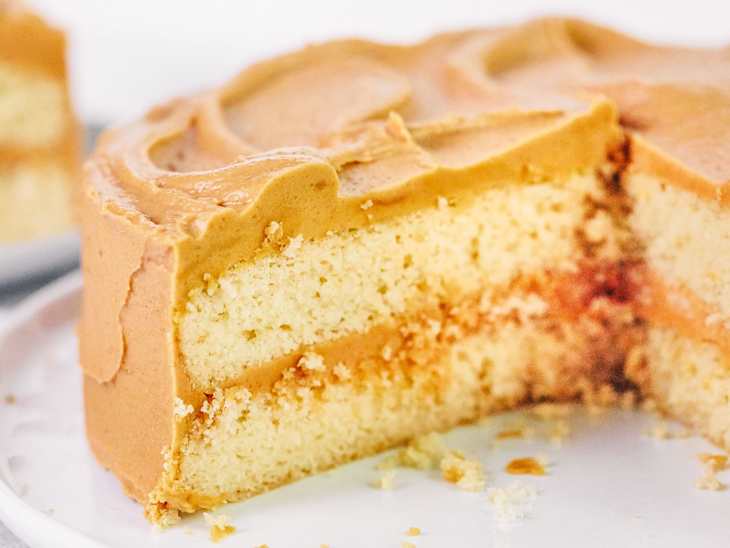
Editor’s Note: If you’ve cooked this beloved recipe before, it might look a little different these days! We recently improved it to make it even easier to follow and more delicious.
My heart beats a little faster when I talk about caramel cake. The tender yellow cake, the thick, crystalline frosting that marries caramelized sugar and butter — it’s an easy cake to fall in love with.
The very best caramel cakes are anything but simple; the yellow cake must only carry the whisper of caramel flavor and be both tender and sturdy enough to support the frosting, which is the real star of the show. The frosting on a caramel cake is a true masterpiece — a thick, whipped caramel that will make you close your eyes in pleasure with every bite. If caramel is your weak spot, this recipe will teach you the way, step by caramelized step.
Why You’ll Love It
- I’ve perfected the recipe. This particular caramel cake is one that I’ve been working on for seven years. With a frosting technique that you might call life changing (if you’re into that kind of hyperbole) it turned a near impossible ideal of a cake into something that can be easily made in a long afternoon.
- The caramel frosting is incredible. Rockstar bakers, intrepid beginners looking for a project, and lovers of caramel — this is the cake for you. You’re going to need a lot of butter, a lot of sugar, and a little bit of patience for this cake, but every single bite will be worth it!
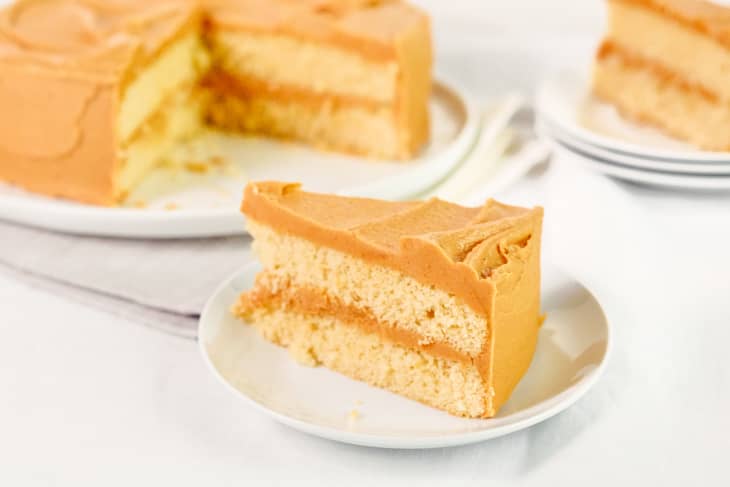
Key Ingredients in Caramel Cake
- Cake layers: “Caramel cake” can be a bit of a misnomer, as the cake itself contains no caramel or caramel flavoring. Traditional caramel cakes call for a boiled milk cake, which is fussy and prone to dryness. I prefer an updated yellow cake which includes brown sugar for more caramel flavor. The yellow cake has more butter, and partnered with the brown sugar, the cake becomes moist with a tighter crumb.
- Caramel frosting: The frosting for caramel cake is unlike any other frosting. There are no eggs or powdered sugar and it is inarguably the challenging part of making the caramel cake. Here we use granulated sugar, a bit of all-purpose flour, heavy cream, unsalted butter, and vanilla extract for a frosting technique that works perfectly each time.
How to Make Caramel Cake
- Bake the cake. You’re baking a pretty standard yellow cake, swapping some of the granulated sugar for brown sugar for a caramel-like sweetness. Be sure to cool and level the cakes before making the frosting.
- Make a dry caramel. Heat some of the sugar for the frosting in a heavy bottomed pan. I love my enameled Dutch oven for this, because the bottom is white and let’s me keep an eye on the caramel easily. Unlike some dry caramels, you can stir the sugar while it cooks. It will go from dry sugar to liquid before beginning to caramelize. Keep your eyes on it and remove it from the heat as soon as it is an even golden-brown.
- Add sugar, cream, and flour and cook the caramel to 240°F. Right to the pan of caramel you’ll add the remaining sugar, flour, and heavy cream and bring the whole mixture to the soft ball stage, which is typical of fudge and praline candies and why having a candy thermometer is important here. This cooking stage is what will determine the eventual thickness of your frosting.
- Cool the frosting. This is where your patience will be required; the caramel mixture needs to cool to about 100°F. This will take about 1 1/2 hours at regular room temperature.
- Finally, beat the frosting. This is when the magic happens. Beat the cooled frosting in a stand mixer to both crystalize and cool it. The frosting will thicken to a spreadable, fudge-like consistency.
- Frost the cake. Use a little of the frosting to fill the cake and then pour the rest of the frosting onto the top of the cake. Twirl and swirl the frosting down the sides of the cake with intention and add any sprinkles before the frosting cools and sets.
Helpful Tips
- Level the cake layers. I don’t believe that every cake needs to be leveled (cutting away the raised hump that results from baking), but because caramel cake frosting isn’t the fluffy filling kind of frosting, this cake demands leveling. Once the cakes are cooled, use a long serrated knife to remove the hump of the cake. You’ll expose the inside of the cake, which when sandwiched with the frosting will absorb moisture from the frosting, making the cake taste even more incredible.
- Mise en place. Have all of your ingredients and equipment ready to go, including cake layers that are cooled and leveled, and a cake plate before you make the frosting.
- Use a candy thermometer. The frosting requires a little candy-making know-how: First you caramelize some sugar and then you turn the caramel into a crystalline frosting similar to fudge. Guarantee success by having a good candy thermometer and some patience while waiting for the caramel to cook, then cool, and finally thicken.
- Cool the frosting quickly. If you are both impatient and brave, you can place the pot of caramel frosting into a shallow ice bath and stir occasionally to cool. This will cut the cooling time in half, but you want to avoid getting any water from the ice bath into the frosting.
- Let the cake sit for a day. Caramel cake only gets better with age, so if you can stand it, let the cake sit for at least a day before slicing and serving.
Make-Ahead and Storage Tips
- Make ahead: You can bake the cake layers several days in advance, cool them, and wrap them tightly in plastic wrap. The cake layers freeze well for up to three months.
- Storage: Store the cake covered at room temperature for up to 5 days.
More Caramel Desserts to Try
Caramel Cake Recipe
The caramel frosting is life changing.
Prep time 40 minutes
Cook time 25 minutes to 30 minutes
Makes 1 layer cake
Serves 10 to 12
Nutritional Info
Ingredients
For the cake:
Cooking spray or butter
- 8 tablespoons
(1 stick) unsalted butter, at room temperature
- 1 cup
granulated sugar
- 1/2 cup
packed light brown sugar
- 1 teaspoon
kosher salt
- 3
large eggs
- 2 1/4 cups
all-purpose flour, plus more for dusting
- 3 1/2 teaspoons
baking powder
- 1 1/4 cups
whole or 2% milk
- 1 teaspoon
vanilla extract
For the caramel frosting and decorating:
- 2 sticks
(8 ounces) unsalted butter, at room temperature, divided
- 2 1/2 plus 1/3 cups
granulated sugar, divided
- 1 cup
heavy cream
- 1 tablespoon
all-purpose flour
- 1 teaspoon
vanilla extract
Instructions
Make the cake:
Heat the oven to 350°F. Coat 2 (9-inch) round cake pans with butter or cooking spray. Coat each pan with a light dusting of all-purpose flour, tapping out the excess. You can also line the bottom of each pan with a parchment paper round for extra insurance, if you'd like.
Beat 1 stick room temperature unsalted butter, 1 cup granulated sugar, 1/2 cup packed light brown sugar, and 1 teaspoon kosher salt together in a stand mixer with a paddle attachment on medium-high speed until lightened in color, about 3 minutes. Beat in 3 large eggs one at a time, waiting until each is fully incorporated before adding in the next.
Add 2 1/4 cups all-purpose flour and sprinkle evenly with 3 1/2 teaspoons baking powder. Beat on the lowest speed until just combined. Add 1 1/4 cups whole milk and 1 teaspoon vanilla extract and beat on low speed for 30 seconds. Increase the speed to high and beat until combined and it gets a bit lighter, 2 to 3 minutes. Scrape down the sides of the bowl with a flexible spatula as needed.
Divide the batter between the cake pans (about 20 ounces each). Bake until the tops spring back slightly when pressed and the cakes pull away from the sides of the pans, 23 to 30 minutes.
Let the cakes cool in the pans for 15 minutes. Flip the cakes out of the pans onto a wire rack, remove the parchment, and let cool completely, about 1 hour. Meanwhile, wash and dry the stand mixer bowl. Make the frosting.
Make the caramel frosting:
Whisk 2 1/2 cups of the granulated sugar, 1 cup heavy cream, and 1 tablespoon all-purpose flour together in a medium saucepan until smooth. Bring to a boil over medium heat, whisking often. Turn off the heat.
Place the remaining 1/3 cup granulated sugar in a wide, deep, large heavy-bottomed pot or enameled Dutch oven. Cook over medium-high heat, stirring constantly, until the sugar turns into a golden-brown caramel, about 2 minutes. The sugar will clump at first, but continue to stir and it will eventually melt and begin to brown.
Remove the pot from the heat. While whisking constantly, slowly pour in the cream mixture (careful, it will bubble up!). Whisk until smooth.
Return the pan to medium-high heat and cook, whisking occasionally, until the mixture registers about 240˚F on a candy or instant-read thermometer, 1 to 2 minutes.
Remove the pot from the heat. Stir in 1 stick of the room temperature unsalted butter and 1 teaspoon vanilla extract until the butter is fully incorporated. Let cool, stirring occasionally, until the mixture is 110°F or cooler, about 1 1/2 hours. If you're in a hurry, fill a clean sink halfway with cold water and ice. Set the pot in the sink and stir, being careful to avoid any water getting into the pan, until the mixture is the right temperature.
Transfer the mixture to the stand mixer. Beat with the whisk attachment on high speed until it crystallizes and lightens in color, about 10 minutes. Add the remaining 1 stick room temperature unsalted butter and continue to beat on high speed until the butter is completely incorporated and the frosting has a texture like buttercream, about 5 minutes more.
Assemble the cake:
If the cakes are domed, use a long serrated knife to trim off the dome so they are level. Set 1 cake layer on a cake or serving plate. Transfer 1 cup of the frosting onto the cake layer and use an offset spatula to spread it out evenly to the edges. Top with the second cake layer trimmed-side down.
Transfer the remaining frosting on top of the cake. Spread the frosting evenly on top of the cake and onto the sides.
Let sit for at least 3 hours before slicing and serving. If you’d like a fudgier texture in the frosting, refrigerate before serving. This cake is even better the day after it is made.
Recipe Notes
Make ahead: The cake layers can be baked, cooled and wrapped in plastic wrap several days in advance. Store at room temperature.
Storage: Store the cake covered at room temperature for up to 5 days.