
Jambalaya
This one-pot dish is packed with rich, deep flavors, and stars smoky andouille sausage and juicy chicken thighs.
Serves4
Prep15 minutes
Cook45 minutes
As a New Orleans native, jambalaya is a comfort food for me, as it is for most Louisianans. I’ve grown up eating it at nearly every big event, from family gatherings to game days. The big-batch, make-ahead dish lets you make a delicious meal for your guests without being tied to the stove and missing out on the party, which is why it’s one of my go-to meals whenever I’m entertaining a group of friends. Here’s how to make it.
Why You’ll Love It
- It’s a New Orleans classic. The jambalaya I’m sharing here stars smoky andouille sausage and chicken — a favorite duo of mine.
- A signature of great jambalaya is the rice. There’s a science to making sure it’s just the right consistency: perfectly fluffy, not too wet, and not at all crispy. I’ve found the key is to bring your liquid, whether it’s water or stock, to a complete boil to create a healthy amount of steam. Then, turn down the heat to make sure you don’t overcook or burn the rice.
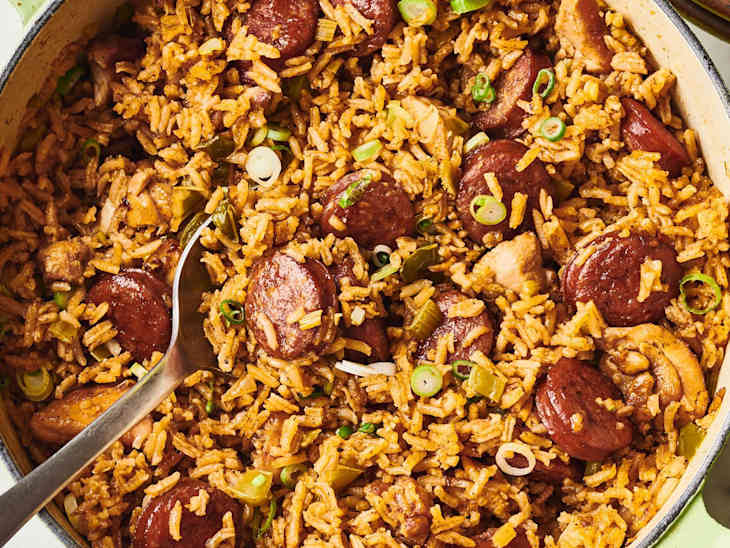
What Is Jambalaya?
Jambalaya means “all mixed up” or “jumbled,” and it is exactly that — a combination of West African, French, and Spanish influences that all came together in New Orleans. Although the base of celery, bell pepper, and onion — known as the “holy trinity” — is essential, the proteins vary depending on the season, from crawfish and shrimp to duck and other game meat.
You might also find tomatoes in your jambalaya, which, as any Louisiana native will tell you, can be a little divisive. Versions with tomatoes are considered Creole; ones without tomatoes, like this one, are Cajun. Although both versions are delicious, I prefer to leave out the acidic bite that tomatoes add.
Key Ingredients in Jambalaya
- Holy Trinity: At the heart of jambalaya is the “holy trinity,” the mixture of celery, bell pepper, and onion that serves as the base of a lot of New Orleans cuisine, as well as many French dishes. The richness of the stock, the slow build of Creole spices, and the way the meat is cooked — in this case, caramelizing the sausage, which coaxes out more flavor and adds that appealing browned finish — also contribute to the deep, complex layers of this dish.
- Creole seasoning: The Creole seasoning, an ingredient you’ll see in a lot of New Orleans cuisine, is particularly crucial here. I like to make a big batch to have on hand in my pantry, and then use it in my gumbo, to flavor rice, or use it to flavor an aioli-like sauce that I spread onto sandwiches or use as a dipping sauce for fries. It’s honestly great with everything, which is why it’s become a staple in Louisiana pantries. You’ll notice I use white pepper instead of black, and that’s because its milder flavor allows the spice mix to be more of a medley, rather than having one ingredient be the star of the show.
- Sausage and chicken: The smokiness from the sausage adds a depth to this dish that tastes quintessentially Southern to me, and is bound to be a crowd-pleaser with any carnivorous crew.
- Rice and broth: Use a long-grain rice like basmati and a low-sodium chicken broth.
How to Cook the Rice in Jambalaya Perfectly
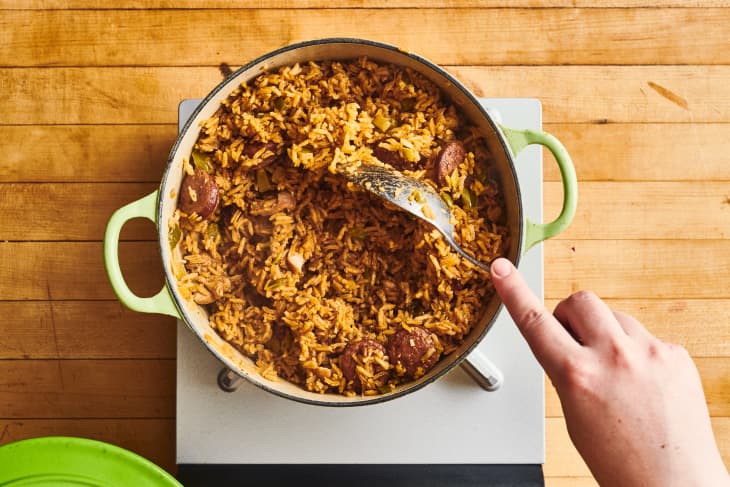
Since the steam is so essential to success, this is what you’ll tweak if the rice isn’t cooked to your preference after the initial cooking time. If it’s too dry, put the lid back on to keep the steam trapped and give the rice time to absorb more liquid. If it’s too wet, take the lid off to let the steam out so more liquid can evaporate. This takes practice, so don’t be discouraged if it takes a few tries to get it right.
How to Make Jambalaya
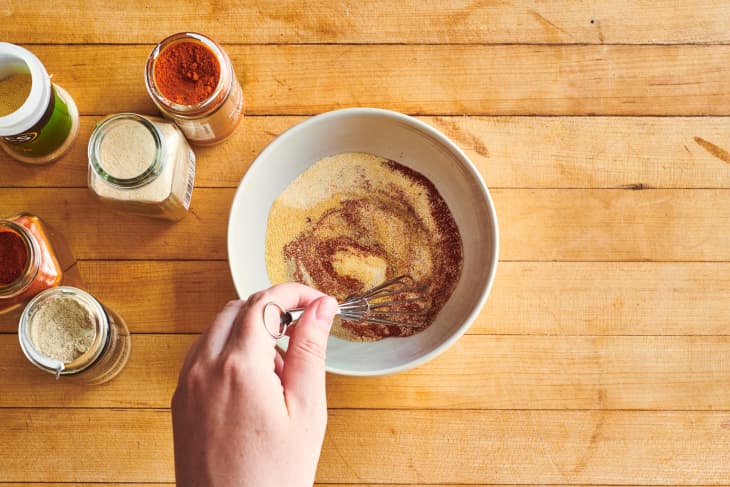
- Make the Creole seasoning. Combine the garlic powder, onion powder, paprika, ground white pepper, and ground cayenne in a small bowl. Season the chicken with a tablespoon of the seasoning.
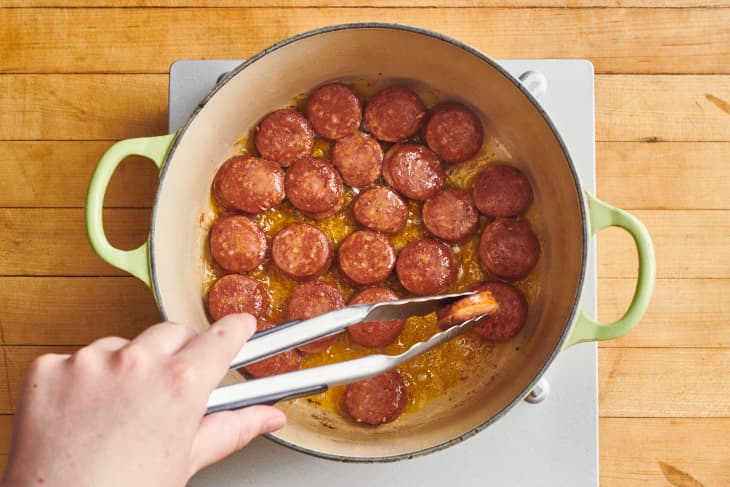
- Brown the sausage. Cook until browned, then transfer to a plate.
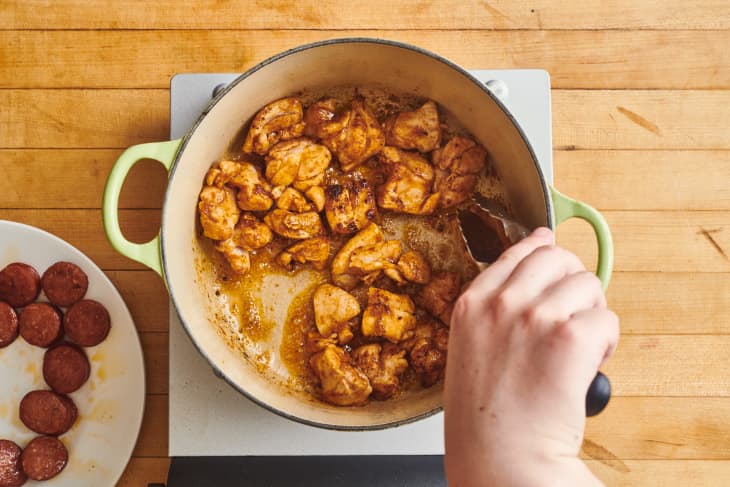
- Brown the chicken. Cook until browned, then transfer to the plate with the sausage.
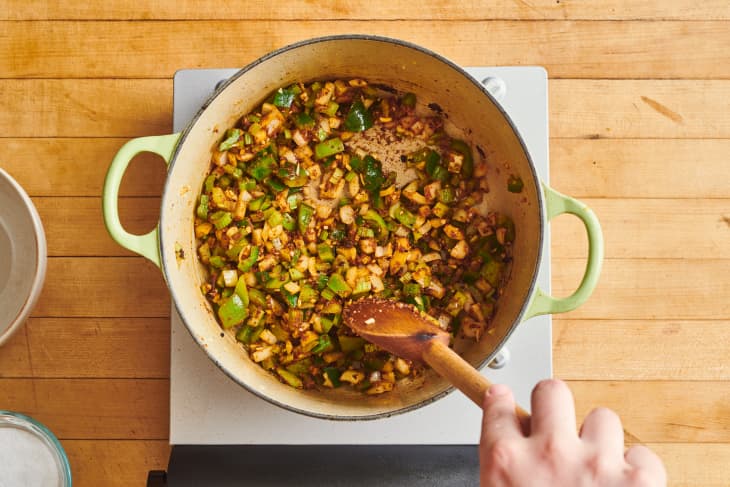
- Sauté the vegetables. Add the onion and garlic mixture, remaining Creole seasoning, and remaining kosher salt. Cook until the onions are translucent.
- Add the rice and toast. Add the rice and cook, stirring frequently, until the rice is opaque and toast-y smelling.
- Add the liquid and meats. Pour in the water or chicken broth and bring to a boil. Return the chicken and sausage and stir well. Cover, reduce the heat to low, and simmer undisturbed until the rice is cooked through.
- Stir and let sit. Give the mixture a gentle stir on top. Cover again, remove from the heat, and let sit for 10 minutes.
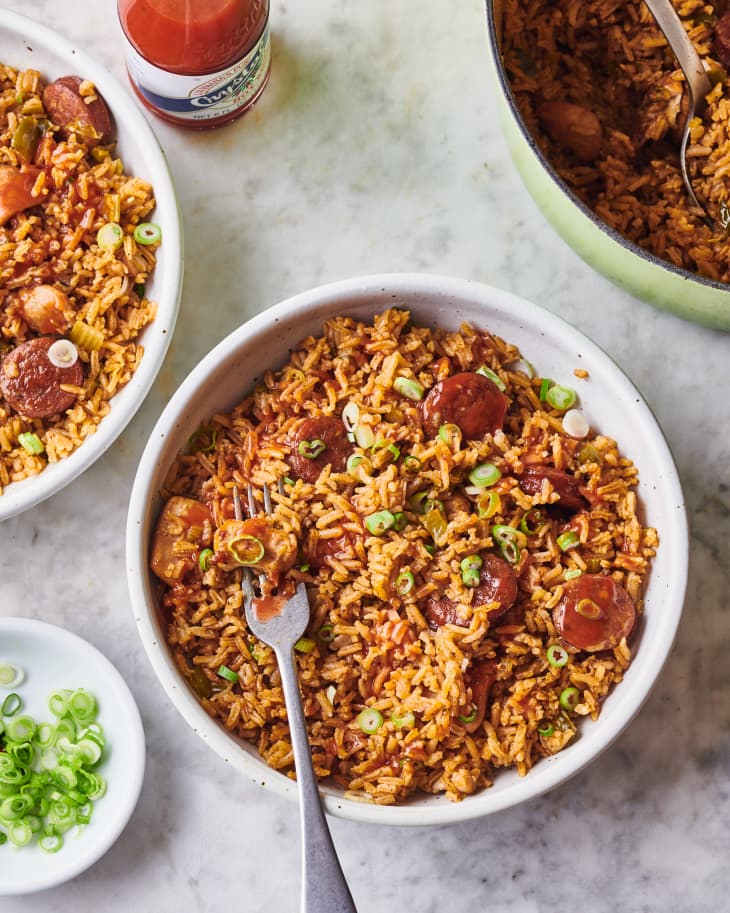
- Fluff and serve. Once rice is at desired consistency, fluff and serve. Garnish with scallions and a few dashes of hot sauce.
How to Serve Jambalaya
When it’s time to eat, I like to make sure I always have a vinegar-based hot sauce nearby. Just a little bit of acid balances and enhances jambalaya’s deep, rich flavors. In some Cajun dishes, acid comes from a squeeze of lemon juice, but for jambalaya I prefer my favorite hot sauce, Crystal. It’s not too thick or overpowering and gives the dish a pop of brightness.
Make-Ahead and Storage Tips
- Make ahead: The Creole seasoning can be made up to 1 month ahead and stored in an airtight container in a cool, dark place.
- Storage: Leftovers can be refrigerated in an airtight container up to 4 days.
What to Serve with Jambalaya
Jambalaya Recipe
This one-pot dish is packed with rich, deep flavors, and stars smoky andouille sausage and juicy chicken thighs.
Prep time 15 minutes
Cook time 45 minutes
Serves 4
Nutritional Info
Ingredients
For the Creole seasoning:
- 1 tablespoon
garlic powder
- 1 tablespoon
onion powder
- 1 tablespoon
paprika
- 1 teaspoon
ground white pepper
- 1/2 teaspoon
ground cayenne
For the jambalaya:
- 1
small yellow onion, diced (about 1 cup)
- 3
medium stalks celery, diced (about 1 cup)
- 1
medium green bell pepper, diced (about 1 cup)
- 3 cloves
garlic, minced
- 12 ounces
boneless, skinless chicken thighs, cut into bite-size pieces
- 1 (about 12-ounce) package
andouille or smoked sausage, cut into 1/2-inch thick rounds
- 1 1/2 teaspoons
kosher salt, divided
- 2 tablespoons
neutral oil, such as canola, divided
- 2 cups
medium or long-grain white rice
- 2 1/2 cups
water or low-sodium chicken broth
- 2
medium scallions, thinly sliced
Vinegar-based hot sauce (I like Crystal), for serving (optional)
Instructions
Place 1 tablespoon garlic powder, 1 tablespoon onion powder, 1 tablespoon paprika, 1 teaspoon ground white pepper, and 1/2 teaspoon ground cayenne in a small bowl and stir to combine.
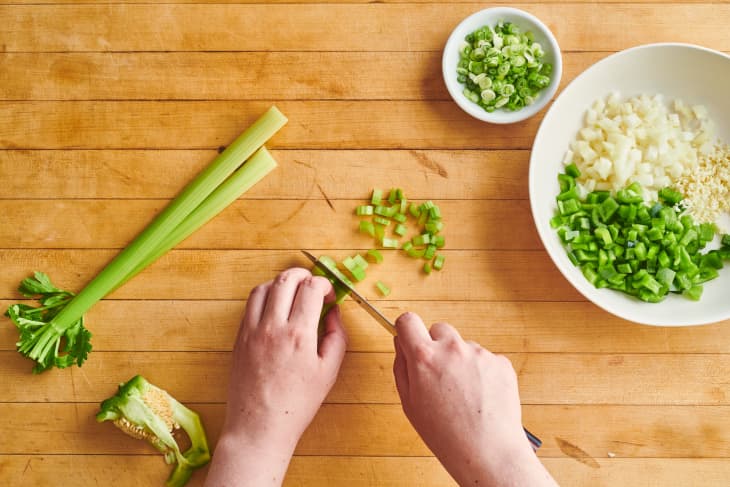
Place 1 diced small yellow onion, 3 diced medium celery stalks, 1 diced medium green bell pepper, and 3 minced garlic cloves in a medium bowl.
Cut 12 ounces boneless, skinless chicken thighs into bite-size pieces. Season the chicken with 1/2 teaspoon of the kosher salt and 1 tablespoon of the Creole seasoning. Cut 1 (12-ounce) package andouille sausage into 1/2-inch thick rounds.
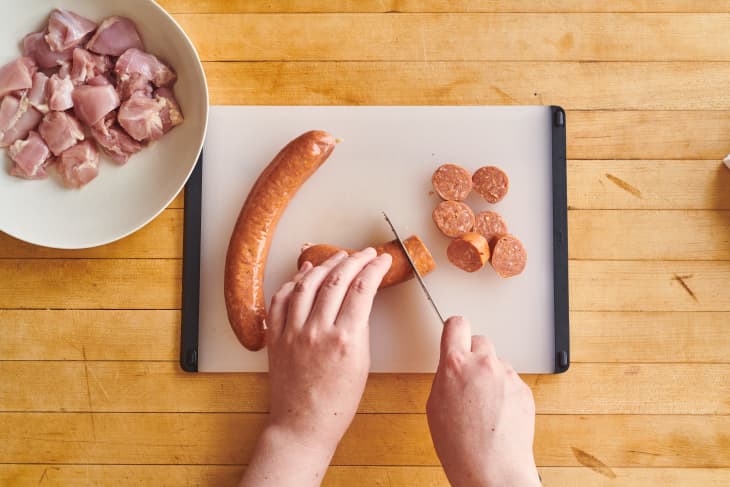
Heat 1 tablespoon of the canola oil in a large, heavy-bottomed pot or Dutch oven over medium-high heat until shimmering. You’ll know the oil is hot enough when a sprinkle of water pops and crackles. Add the sausage in a single layer and cook until browned on the cut sides, 3 to 4 minutes per side. Using tongs, transfer the sausage to a plate.
Add the remaining 1 tablespoon canola oil to the drippings in the pot. Add the chicken and cook until browned, 2 to 3 minutes per side. Using tongs, transfer the chicken to the plate with the sausage.
Add the vegetable mixture, remaining Creole seasoning, and remaining 1 1/2 teaspoon kosher salt. Cook, scraping up the browned bits from the bottom of the pot and stirring occasionally, until the onions are translucent, about 2 minutes.
Add 2 cups white rice and cook, stirring frequently, until the rice is opaque and toast-y smelling, about 3 minutes.
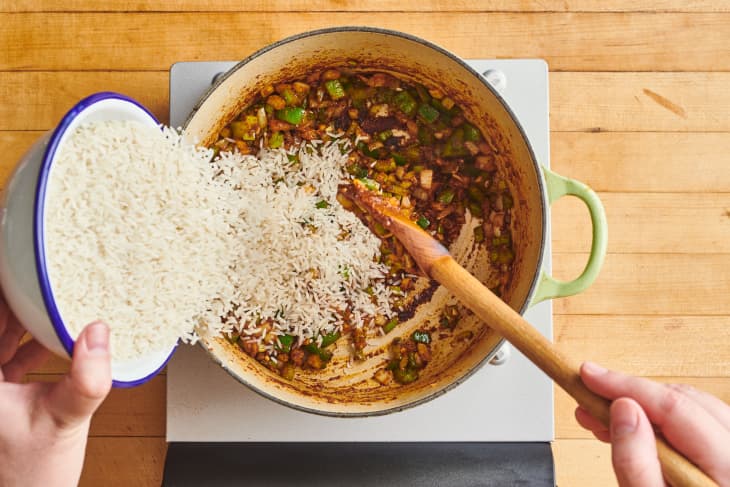
Pour in 2 1/2 cups water or chicken broth and bring to a boil. Return the chicken and sausage and any accumulated juices to the pot and give everything one good stir to mix together. Cover, reduce the heat to low, and simmer undisturbed until the rice is cooked through, 20 to 30 minutes.
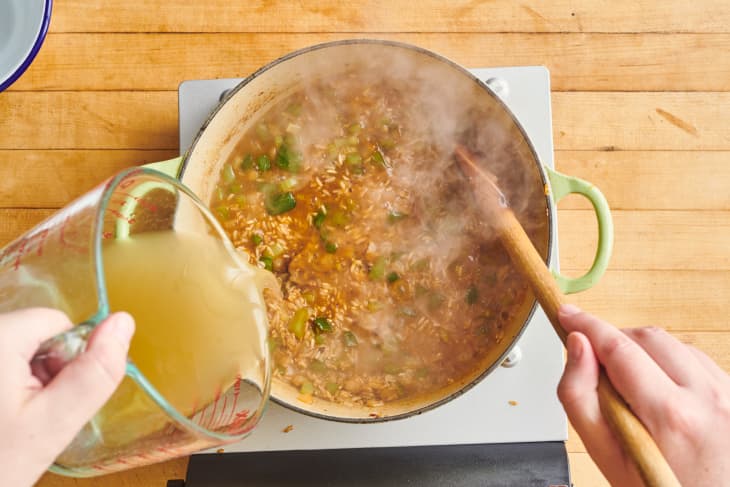
Give the mixture a gentle stir on top. Cover again, remove from the heat, and let sit for 10 minutes. If the rice is still too wet, take the lid off so the extra liquid evaporates. If the rice is a little dry, keep the lid on a little longer to give the rice more time to absorb the liquid.
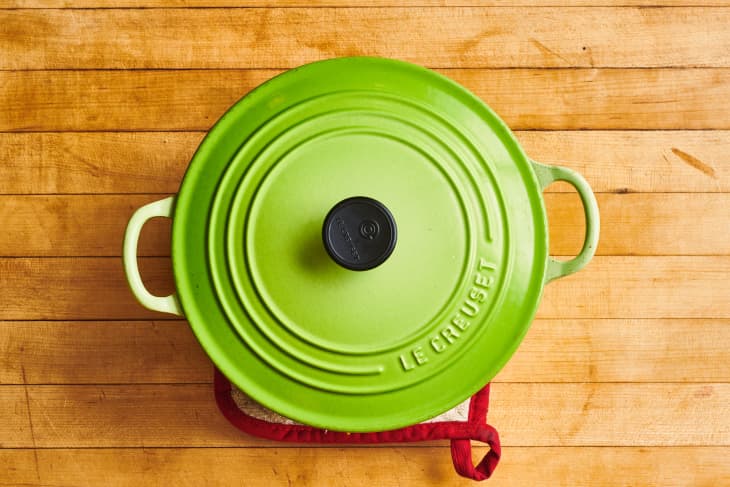
Once rice is at desired consistency, fluff and serve. Garnish with 2 thinly sliced scallions and a few dashes of vinegar-based hot sauce.
Recipe Notes
Make ahead: The Creole seasoning can be made up to 1 month ahead and stored in an airtight container in a cool, dark place.
Storage: Leftovers can be refrigerated in an airtight container up to 4 days.