
Perfect Mashed Potatoes
These rich and creamy mashed potatoes are the only ones we ever make.
Serves10 to 12
MakesMakes about 12 cups
Prep10 minutes
Cook30 minutes to 35 minutes
Editor’s Note: If you’ve cooked this beloved recipe before, it might look a little different these days! We recently improved it to make it even easier to follow and more delicious.
I can’t think of anything more comforting and delicious than mashed potatoes. While they can be a blank canvas for all sorts of mix-ins and flavorings, nothing beats the creamy, dairy-rich, classic version. Even if you only have them once a year (they are a must-have for my Thanksgiving spread!), I say go all out and do it right. And if you’ve never made them before, I’m a pro at mashing taters and am here to walk you through every step. Here’s how to make perfect mashed potatoes, with recommendations for potato type, what dairy to use, and mashing methods.
Why You’ll Love It
- It goes with everything. These mashed potatoes can go alongside any cooked protein, from turkey to prime rib. While they’re delicious on their own, you also top with gravy if you’re a fan of the combo.
- There’s only 3 ingredients. All you need to get are the right kind of potatoes, butter, and half-and half (we assume you already have salt).
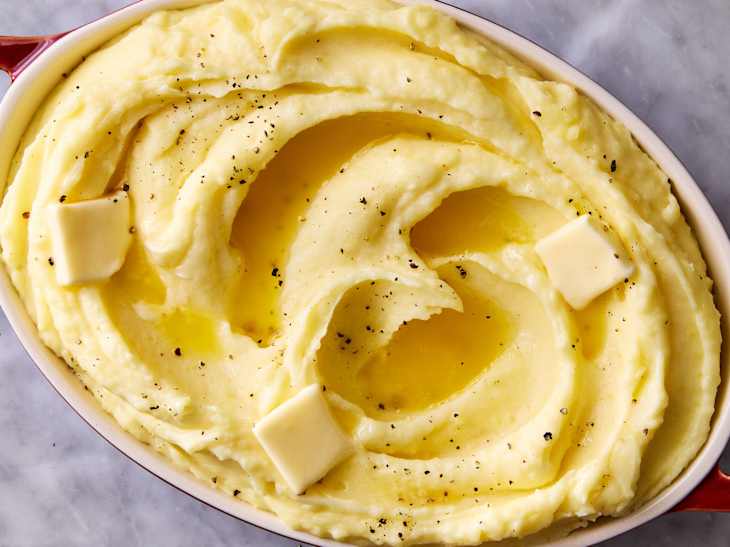
Key Ingredients for Mashed Potatoes
- Potatoes: The best potatoes for mashed potatoes are Russets and Yukon Golds. Russets will give you the creamiest mash, but many prefer the flavor and golden color of Yukon Golds. Avoid waxy, red potatoes for mashed potatoes, which won’t break down enough (read: lumps) and don’t absorb dairy well.
- Half-and-half: Half-and-half is richer than milk, but not as rich as heavy cream. Use heavy cream if you want over the top, decadent results.
- Butter: Butter is one of the primary flavors in mashed potatoes, so use the best quality you can. Using unsalted lets you control the salt, but if you want to use salted, skip the additional salt in step 2 and simply taste and add salt as needed in the final mashed potatoes.
- Kosher salt: Even the creamiest mashed potatoes can be bland without the proper amount of salt. In this recipe, you’ll add the salt in stages — first to the water for boiling the potatoes, and then to the half-and-half as you’re heating it up. While the amount may feel generous, you shouldn’t need to add much more salt once your mashed potatoes are ready.
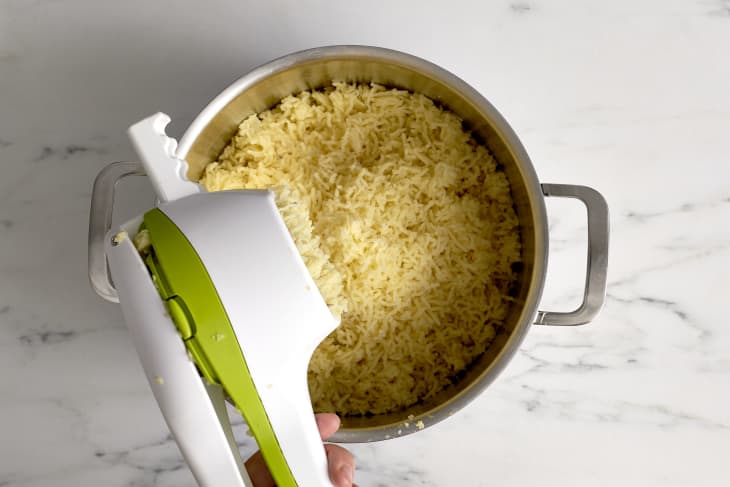
How to Make Mashed Potatoes
- Prep and cook the potatoes. Peel and cut the potatoes into rough 2-inch chunks, then place in a large pot. (You can skip peeling if you plan to process the potatoes later with a food mill or ricer. ) Cover the potatoes with cold water and add salt. Cover and bring to a gentle boil. Uncover and reduce the heat to maintain a gentle simmer. Cook until knife tender.
- Heat the half-and-half with more salt. Heat them together small saucepan. Cover to keep warm.
- Drain the potatoes and melt the butter. Drain in a colander. Melt the butter in the pot used to cook the potatoes.
- Mash the potatoes. You have a few options here for mashing. Add the potatoes back to the pot with the butter and mash with a potato masher into your desired consistency. For the fluffiest, smoothest potatoes, use a food mill or ricer instead and process the potatoes back into the pot (discard the potato skins that will be left behind in the ricer or food mill).
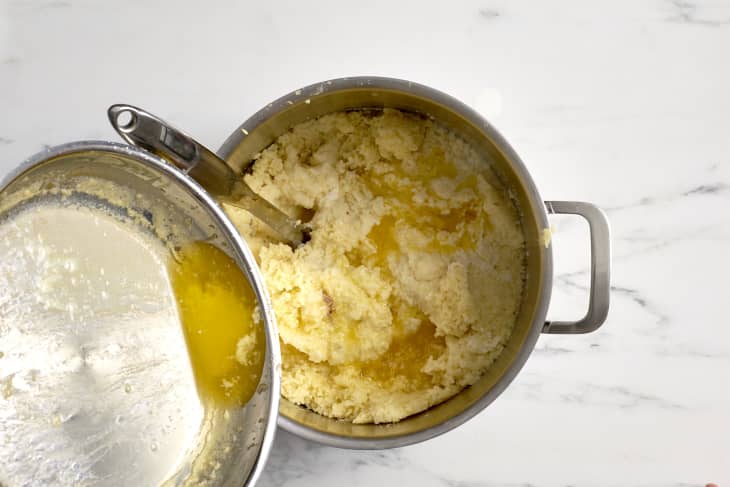
- Add the dairy. Gently stir the potatoes and butter together. When all the butter is absorbed, stir in the warm half-and-half. It will seem soupy at first, but the potatoes will gradually absorb the liquid and turn into a creamy mixture.
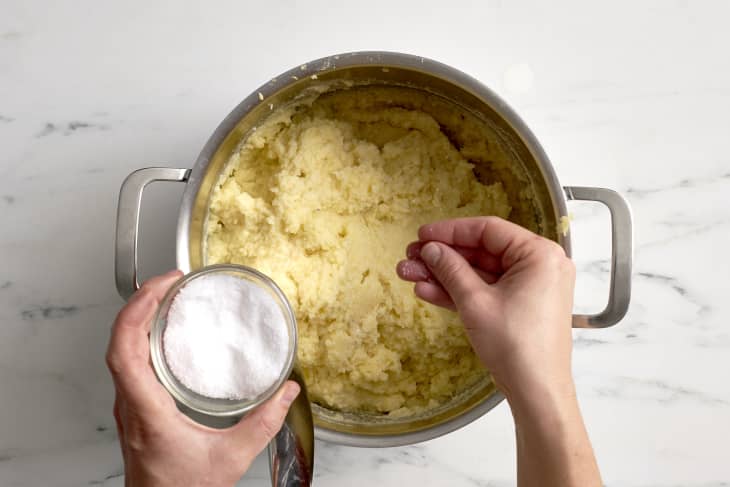
- Taste, garnish, and serve. Taste and season with more salt as needed. This is also a good time to add pepper if using. Spoon into your serving dish and top with optional garnishes, such as a pat of butter or some chopped chives.
Common Mashed Potato Issues
If you’ve run into mashed potato problems in the past, don’t fret: we’ve got solutions to the most common issues.
1. Your mashed potatoes are gluey.
There are a few ways to prevent gluey mashed potatoes. First, never use a blender or food processor to whip them! Second, add the butter before the half-and-half. The amount of water in the half-and-half combines with the starch molecules, which makes the potatoes gluey. When you add the butter first, it coats the starch and results in silkier potatoes.
2. Your mashed potatoes are runny.
Don’t be tempted to cut the potatoes smaller so they cook faster. The smaller you cut the potatoes, the more water they will absorb as they are boiling, resulting in runny mashed potatoes. Stick to 2-inch chunks or larger.
3. Your mashed potatoes are lumpy.
Lumpy mashed potatoes are likely a result of undercooking. Starting the potatoes in cold water will help (adding potatoes to hot water can cause the outsides to cook more quickly than the insides) and wait to drain the potatoes until a sharp knife slides through easily. If you do undercook them, add some milk and warm them over low heat until they soften.
When processing the cooked potatoes, using a food mill or ricer will result in the smoothest mashed potatoes.
Mashed Potato Variations
Looking to switch things up this year? We’ve got no shortage of ways to do just that.
Make-Ahead, Storage, Reheating, and Freezing Tips
- Make ahead: You can make your potatoes in advance of serving. If it’s just an hour or so, leave them in the pot you mashed them in and don’t garnish yet. Place the pot in a large pan of gently simmering water to keep warm.
- Storage: Leftover mashed potatoes can be refrigerated in an airtight container for up to 5 days.
- Reheating: To reheat mashed potatoes, we recommend transferring them to a baking dish, adding cream, broth, or half and half along with butter, covering them, and heating at 350°F until warmed through.
- Freezing: You can freeze mashed potatoes, either in a large freezer bag or food container or portioned into one-cup mounds. Mashed potatoes can last up to one month in the freezer. Thaw in the refrigerator before reheating.
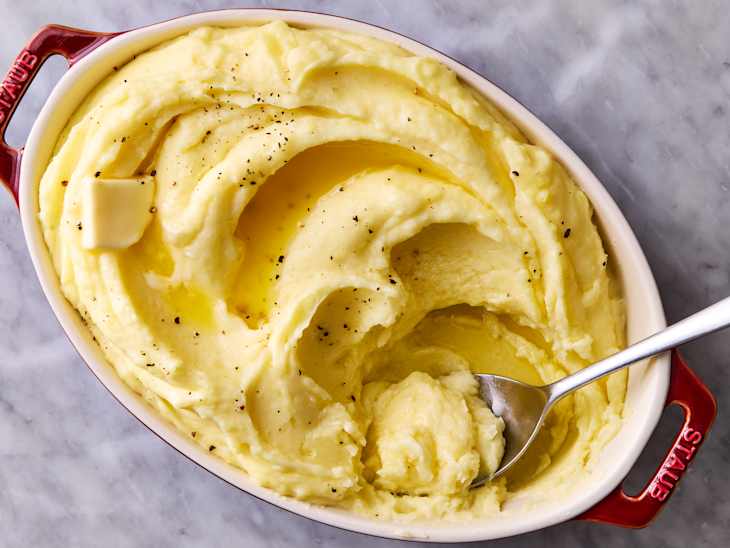
What to Serve with Mashed Potatoes
Perfect Mashed Potatoes Recipe
These rich and creamy mashed potatoes are the only ones we ever make.
Prep time 10 minutes
Cook time 30 minutes to 35 minutes
Makes Makes about 12 cups
Serves 10 to 12
Nutritional Info
Ingredients
- 5 pounds
Yukon Gold or russet potatoes
- 2 tablespoons
plus 2 teaspoons kosher salt, divided
- 2 cups
half-and-half
- 2 sticks
(8 ounces) unsalted butter
Garnish options:
Finely chopped fresh chives
Freshly ground black pepper
- 1 to 2
pats of butter
Instructions
Peel and cut 5 pounds russet potatoes into rough 2-inch pieces (skip peeling if you will be using a ricer or food mill). Place in a large pot and add enough cold water to cover by about 1 inch. Stir in 2 tablespoons of the kosher salt. Cover and bring to a gentle boil over medium-high heat. Uncover and reduce the heat as needed to maintain a gentle simmer. Cook until knife tender, 20 to 30 minutes.
Meanwhile, heat 2 cups half-and-half and the remaining 2 teaspoons kosher salt in a small saucepan over low heat, stirring to dissolve the salt, until just starting to simmer around the edges. Turn the heat off and cover to keep warm.
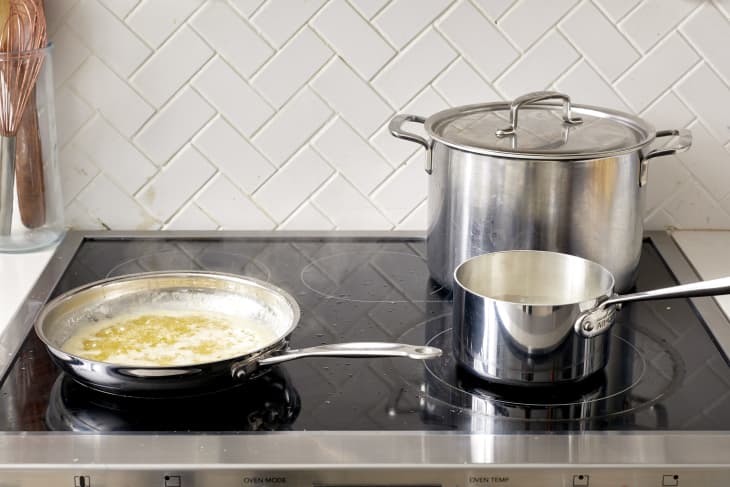
When the potatoes are ready, drain them in a colander. Melt 2 sticks unsalted butter in the now-empty pot over medium heat. Turn the heat off.
If using a potato masher, return the potatoes to the pot and mash until your desired consistency. If using a food mill or ricer, work in batches and pass the potatoes into the pot of butter; discard the potato skins.
Gently fold the butter and potatoes together with a flexible spatula until the butter is absorbed. Pour in the half-and-half and gently fold together. It will seem soupy at first, but the potatoes will gradually absorb the liquid and turn into a creamy mixture.
Taste and season with more kosher salt as needed. Transfer to a serving. Garnish with finely chopped chives, freshly ground black pepper, and a pat or two of butter if desired.
Recipe Notes
Make ahead: You can make your potatoes in advance of serving. If it's just an hour or so, leave them in the pot you mashed them in and don't garnish yet. Cover and place the pot in a large pan of gently simmering water to keep warm. Otherwise, let cool and refrigerate in an airtight container for up to 2 days.
Reheating: Transfer to a baking dish and drizzle with some cream, milk, broth, or half-and-half. Cover and heat in a 350°F oven until warmed through, 20 to 30 minutes.
Storage: Leftover mashed potatoes can be refrigerated in an airtight container for up to 5 days.
Freezing: You can absolutely freeze mashed potatoes, either in a large freezer bag or food container or portioned into one-cup mounds. This time-saving trick can help you get ahead on Thanksgiving prep or ensure you have leftovers to enjoy for weeks afterwards. Mashed potatoes can last up to one month in the freezer. Thaw overnight in the refrigerator.
What to Do with Leftover Mashed Potatoes
From crispy croquettes to fluffy mashed potato pancakes, here are our favorite ways to use up any leftovers.